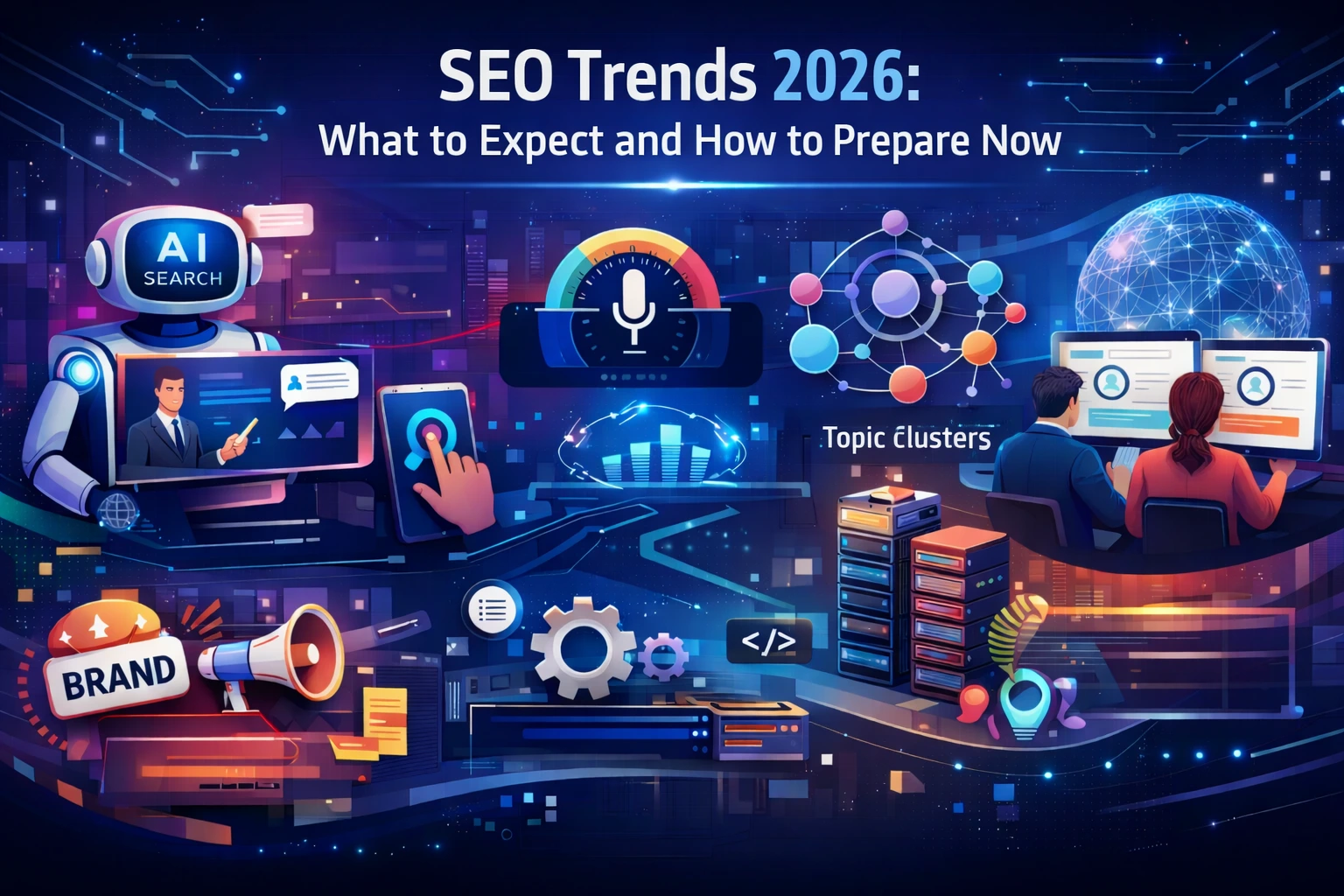
SEO Trends 2026: What Businesses Should Expect and How Yolink Helps You Stay Ahead
SEO in 2026 is no longer about “ranking pages.” It is about understanding user behavior, analytics, strategy, and data-driven decision-making. Search engines are getting smarter, users are becoming more demanding, and competition is tougher than ever. In this environment, those who publish the most do not win — those who analyze better and adapt faster do.
This is where next-generation analytics tools like Yolink come into play. They help businesses stop guessing and start clearly understanding what is really happening with users on their websites.
Let’s explore the key SEO trends of 2026 and see how they are directly connected to analytics, clicks, and user behavior.
1. AI Search and Zero-Click Results: The Fight Is for Attention, Not Clicks
By 2026, search engines will increasingly provide ready-made answers directly in search results. Users get information instantly, do not visit websites, interact with AI-generated blocks.
This leads to a decline in traditional organic traffic — but a sharp rise in competition for attention.
❗ Important: when users do click through to a website, they expect maximum relevance.
What becomes critical is:
what elements users see first,
where they click,
where they get confused or leave.
👉 Yolink allows you to track clicks, user journeys, and exit points, helping you understand whether a page meets user expectations after AI-driven search results.
2. Behavioral Factors Become Core Ranking Signals
In 2026, SEO becomes fully dependent on UX and user behavior:
- scroll depth,
- time on page,
- return to search,
- on-page activity.
Search engines evaluate not only the page itself, but how users react to it.
📊 Instead of assumptions, businesses need precise data:
- where users click,
- which elements they ignore,
- which blocks actually work.
Yolink analyzes real user actions, not abstract metrics — allowing you to optimize pages based on real behavior, not intuition.
3. SEO = UX + Analytics + Product Thinking
In 2026, winning websites think like products: they test hypotheses, measure outcomes,optimize interfaces for conversions.
Buttons, forms, links, and CTAs affect not only sales — but SEO as well.
If users don’t click, don’t engage, leave quickly, search engines take notice.
👉 With Yolink, you can track clicks, behavior, and funnels, identify UX weaknesses, and strengthen pages that are meant to deliver results.
4. Search Personalization and Multiple User Scenarios
In 2026, the same query produces different results: for mobile vs. desktop users, for new vs. returning visitors, for different regions.
That means user behavior also differs.
There is no longer a single “perfect” interface — only scenarios.
📌 Analytics must show:
- how different segments behave,
- where mobile users struggle,
- which clicks work only for specific audiences.
Yolink helps segment behavior and reveal the real picture, instead of misleading averages.
5. Content Without Analysis No Longer Works
Even the highest-quality content may fail if users can’t find the right section, important links are not clickable, the structure is unclear.
In 2026, content is not just text — it is the user journey within the page.
👉 With Yolink, you can understand:
- which sections are actually read,
- which links are clicked,
- where content fails to perform.
This turns SEO content from “checkbox articles” into a real growth tool.
6. Brand, Trust, and Measurable Engagement
Search engines increasingly understand which websites users trust: do users return? do they interact with content? do they take action?
Trust is measured not by words, but by behavior.
📈 Click and interaction analytics become indicators of real website value.
Yolink shows how users interact with your brand, allowing you to build trust based on data — not assumptions. SEO in 2026 Is About Data, Not Guesswork.
SEO in 2026 means: less magic, more analytics, deeper understanding of users.
Projects that track clicks and behavior, analyze UX, make data-driven decisions, will succeed even in the era of AI search and zero-click results.
In this context, Yolink is not just an analytics tool — it becomes a core part of your SEO strategy, helping transform real user behavior into growth in traffic, conversions, and rankings.